
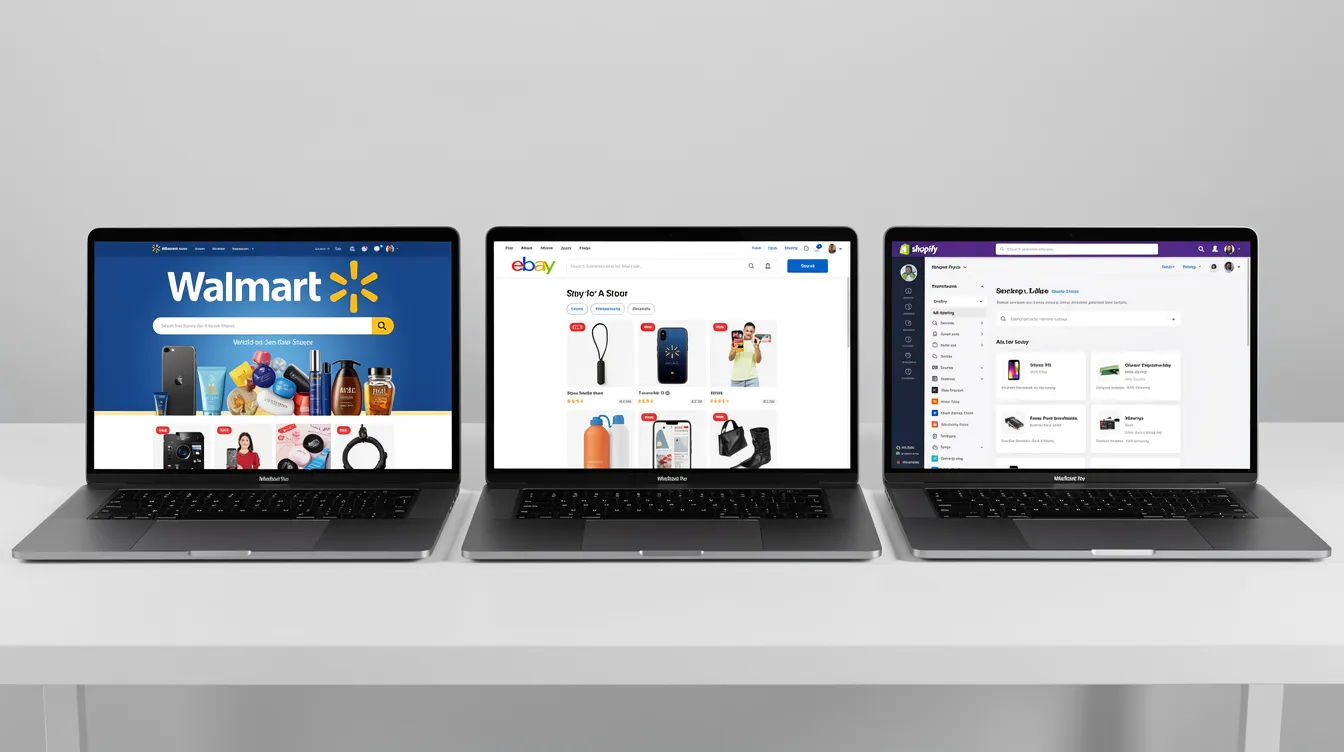

Amazon commands roughly 35% of U.S. e-commerce traffic and its third-party sellers move an estimated $750 billion in goods annually. Yet a growing number of consumers and sellers are asking whether Amazon is really the best option for every purchase and every product listing. Amazon generated 599 million pounds of plastic waste in 2020, and its tax avoidance practices cost the UK £433 million in 2023 alone. These concerns, combined with rising seller fees and intense competition, are pushing people to find alternatives that better fit their values, products, and goals. Amazon alternatives vary and can be better for specific types of shopping, and online shopping is evolving towards specialized retailers rather than general marketplaces. The right platform depends on whether you want to sell or buy, what product categories matter, and which market you serve.
How We Chose the Best Amazon Alternatives
We evaluated each platform across seven dimensions that matter most to sellers and consumers in 2026:
-
Market share and customer base size - Global marketplace GMV reached $3.8 trillion in 2026, and we prioritized platforms with meaningful traffic.
-
Product range and category strengths - Some platforms dominate electronics while others own handmade goods or food.
-
Seller fees and revenue sharing - Referral rates, fulfillment costs, hidden storage fees, and subscription charges.
-
Customer experience and trust - Shipping speed, return policies, loyalty programs, and brand reputation.
-
International reach and regional dominance - Strength in specific geographies like Latin America or Asia.
-
Unique value propositions - What makes each site genuinely different from Amazon.
-
Growth trajectory and platform stability - Year-over-year revenue trends, seller base expansion, and financial health.
Top 8 Amazon Alternatives for 2026
1. Walmart Marketplace
Walmart is a major competitor of Amazon for everyday items, and its e-commerce business has been closing the gap fast. Walmart Marketplace now hosts approximately 150,000 sellers in the U.S., a fraction of Amazon's 2.3 million globally - which means far less competition for the Buy Box and cheaper advertising costs.
Why It Stands Out: Walmart combines thousands of physical stores with a growing digital marketplace, giving sellers access to customers who shop both in person and online.
Best For: Sellers of everyday essentials, groceries, and household items who want to reach price-conscious consumers.
Key Strengths:
-
No monthly subscription fee (Amazon charges $39.99/month for Pro sellers)
-
Referral fees of 6–15% in most categories, often cheaper than Amazon
-
Average advertising cost per click of $0.30–$0.75 versus Amazon's $1.20–$2.50
-
Walmart Fulfillment Services with new seller incentives in 2026
Possible Limitations: Stricter seller approval (5–14 day onboarding), smaller buyer base, and less mature analytics tools than Amazon.
2. eBay
eBay provides a platform for auctions and refurbished technology, and it remains a major competitor to Amazon for online shopping. With roughly $74 billion in global GMV, eBay has evolved well beyond its auction roots into a serious retail marketplace.
Why It Stands Out: Flexible selling formats - auction and fixed-price - combined with strong cross-border reach make it ideal for sellers with unique inventory.
Best For: Collectibles, refurbished goods, discontinued products, jewelry, and international sales.
Key Strengths:
-
Lower overall fees than Amazon in many categories
-
Auction format lets the market set prices on rare items
-
Strong buyer protection protocols
-
No waiting period for listing most product types
Possible Limitations: Less sophisticated logistics network, an interface that feels dated compared to newer platforms, and limited fulfillment services.
3. Etsy
Etsy offers unique handmade gifts from independent sellers and supports small businesses producing handmade clothing, jewelry, toys, accessories, and personalized items. With $14.8 billion in GMV, 7.5 million active sellers, and 96 million active buyers, the platform has become the go-to marketplace for anyone who wants to support independent artisans.
Why It Stands Out: A community-focused platform where buyers actively search for high quality items they cannot find on mass-market sites. Etsy offsets 100% of carbon emissions from shipping, reducing its carbon footprint in a way few online retailers match.
Best For: Handmade products, vintage goods, personalized gifts, and creative services.
Key Strengths:
-
Niche audience willing to pay premium prices for unique goods
-
Lower competition compared to Amazon's saturated categories
-
Strong brand identity built around craft and creativity
Possible Limitations: Limited product categories, lower purchase frequency for non-seasonal items, and more effort required for brand storytelling.
Platforms like Uncommon Goods also feature one-of-a-kind gifts from independent artisans, offering another channel for creative sellers.

4. Shopify (Building Your Own Store)
Rather than selling on someone else's marketplace, Shopify lets you build your own website and own the entire customer relationship. This business model trades built-in traffic for full control over branding, data, and margins.
Why It Stands Out: Complete ownership of customer data and brand experience - no marketplace algorithm deciding your visibility.
Best For: Established brands wanting direct customer relationships and higher margins on every sale.
Key Strengths:
-
No referral fees to a marketplace
-
Full customization of your company's storefront
-
Direct access to customer emails, purchase history, and behavior data
Possible Limitations: Standalone stores convert at 1.8–3.2% compared to 5.4–8.6% for marketplaces. You pay for every click through advertising, SEO, and social media marketing. It takes money and patience to build traffic from scratch.
5. Target
Target offers curated selections of home goods and clothing through its invite-only Target Plus marketplace. The platform now features over 2 million SKUs from roughly 1,200 curated partners, with a GMV goal of $5 billion by 2030.
Why It Stands Out: Premium brand positioning with a focus on design, quality, and family-oriented products. Target's reputation for home decor, beauty, and apparel draws customers willing to pay for curation.
Best For: Home goods, fashion, beauty products, and family-oriented items.
Key Strengths:
-
Strong brand trust among consumers
-
Same-day delivery options through physical stores
-
Curated selection shields sellers from oversaturation
-
Fast-growing categories include Korean beauty and sustainable apparel
Possible Limitations: Invitation-only access, smaller overall marketplace scale, and less flexibility than open platforms.
6. Alibaba
Alibaba and its affiliated platforms hold roughly 23.4% of global marketplace GMV, making it the world's second-largest e-commerce ecosystem behind Amazon.
Why It Stands Out: Direct access to every manufacturer and supplier category imaginable, at wholesale pricing that is significantly cheaper than retail.
Best For: Bulk purchases, private label manufacturing, and B2B sales across Asia and beyond.
Key Strengths:
-
Massive supplier network spanning virtually every product category
-
Competitive pricing at scale
-
Strong infrastructure across China and Southeast Asia
Possible Limitations: Longer shipping times, language barriers, minimum order quantities, and quality control challenges that require careful vetting.
7. Best Buy
Best Buy specializes in consumer electronics and major appliances and is relaunching its third-party marketplace to broaden its online assortment. Newegg also focuses on computer hardware and gaming products, making the electronics category increasingly competitive.
Why It Stands Out: Deep category expertise backed by services like Geek Squad support and price matching.
Best For: Consumer electronics, appliances, gaming products, and tech accessories.
Key Strengths:
-
Trusted brand in electronics with knowledgeable employees
-
Strong customer support and in-store pickup
-
Price matching policies that reassure buyers
Possible Limitations: Limited to electronics and related categories, marketplace still emerging, and strict curation standards.
8. Mercado Libre
Mercado Libre dominates Latin American e-commerce with over 100 million unique buyers and Q2 2025 revenue of $6.8 billion - up 34% year-over-year.
Why It Stands Out: The leading platform in the world's fastest-growing e-commerce region, with integrated payments (Mercado Pago) and logistics (Mercado Envios).
Best For: Businesses targeting Latin American markets across Brazil, Mexico, Argentina, and beyond.
Key Strengths:
-
Market leadership across the region with strong community trust
-
Integrated fintech services including digital wallets and credit
-
Robust logistics reducing delivery friction
Possible Limitations: Regional focus limits global reach, currency and regulatory complexity, and infrastructure gaps in some markets.
Quick Comparison of the Best Amazon Alternatives for Online Selling
Walmart, Target, and Best Buy are popular Amazon alternatives, but each serves a different niche. Here's a quick reference:
| Platform | Best For | Monthly Fee | Typical Referral Fee |
|---|---|---|---|
| Walmart | Everyday essentials, household items | $0 | 6–15% |
| eBay | Unique items, collectibles, international reach | $0 (basic) | ~12–15% |
| Etsy | Handmade, vintage, personalized products | $0 (basic) | ~6.5% + fees |
| Shopify | Full brand control, direct customer relationships | $39+/month | 0% marketplace fee |
| Target | Premium home goods, family-oriented products | $0 | Variable |
| Alibaba | Wholesale purchasing, B2B transactions | $0 (basic) | Variable |
| Best Buy | Consumer electronics, tech products | TBD | TBD |
| Mercado Libre | Latin American market expansion | $0 (basic) | Variable by country |
How to Choose the Right Amazon Alternative
Choose Based on Your Product Category
Match your products to the platform where buyers already search for them. Chewy is an online retailer dedicated to pet supplies - a far better fit than Amazon for brands in that space. For food and groceries, Thrive Market offers over 6,000 sustainable products online with carbon-neutral shipping on orders over $49, while Martie sells surplus groceries at up to 80% off retail prices and has saved consumers over 9 million dollars by selling surplus food. iHerb.com specializes in groceries and supplements online. Grove Collaborative specializes in eco-friendly household products and provides personal care products like shampoo bars and cleaning products, with an emphasis on safe products for everyday home and personal care use. Earth Hero offers sustainable gifts that support environmental causes. Together, these can be more ethical alternatives for shoppers who want purchases that are better for the planet. Some shoppers also use niche retailers to find vegan products and cruelty free formulas in beauty and personal care.
Choose Based on Your Business Model (Including Small Businesses)
If you want to sell across multiple channels with minimal overhead, marketplaces like Walmart or eBay are good alternatives. If you want to build a brand and own your customer data, Shopify is the best option. Consider your logistics capabilities, advertising budget, and whether you can manage inventory across platforms without waiting for each to pay out on different schedules.
Choose Based on Your Target Market
Geographic considerations matter. If you use google to research where your customers are, you might discover opportunities in Latin America (Mercado Libre) or Southeast Asia (Shopee) that Amazon barely touches. For the UK book market specifically, Amazon holds over 50% of UK print book sales, with ongoing concerns about workers, but independent bookshops in the UK are at their highest number since 2013. Bookshop.org supports independent bookstores with 10% of sales going directly to local businesses. Hive allows customers to support local UK bookstores with purchases. Oxfam Bookshops offer a selection of secondhand books. When comparing fashion alternatives, buying secondhand clothing is the most sustainable option. If you want to shop local and support your community, these independent bookshops are worth exploring. Brothers We Stand emphasizes ethical fashion and sustainability. THTC focuses on fair pay and environmental practices. Patagonia is one company that uses only organic cotton in its clothing.

Which Option Is Best for You?
-
Choose Walmart Marketplace if you sell everyday consumer goods and want better prices on fees
-
Choose eBay if you have unique items or need flexible selling formats for a global market
-
Choose Etsy if you create handmade or personalized products for customers who value craft
-
Choose Shopify if you want to build your own brand and own every customer touchpoint
-
Choose multiple platforms if you want to diversify your sales channels - the smartest sellers treat these as complementary, not competing
Final Thoughts
The best alternative to Amazon depends on your specific goals, products, and values. Rather than replacing Amazon entirely, the strongest strategy is a multi-channel approach. Use repricing tools and automation to manage prices across platforms, track which channels deliver the strongest margins, and double down on what works. Test one or two new platforms this quarter, measure the results, and expand from there. The world of e-commerce is no longer a single-player game - and the sellers who diversify now will be the ones best positioned when Amazon's next fee increase hits.